Frequently Asked Questions
Cover letter template
Executive Suite
Premium design for senior management and executive positions
Executive Premium Management Professional
Prepare a letter
Write your letter first. Choose this layout when your draft is ready.
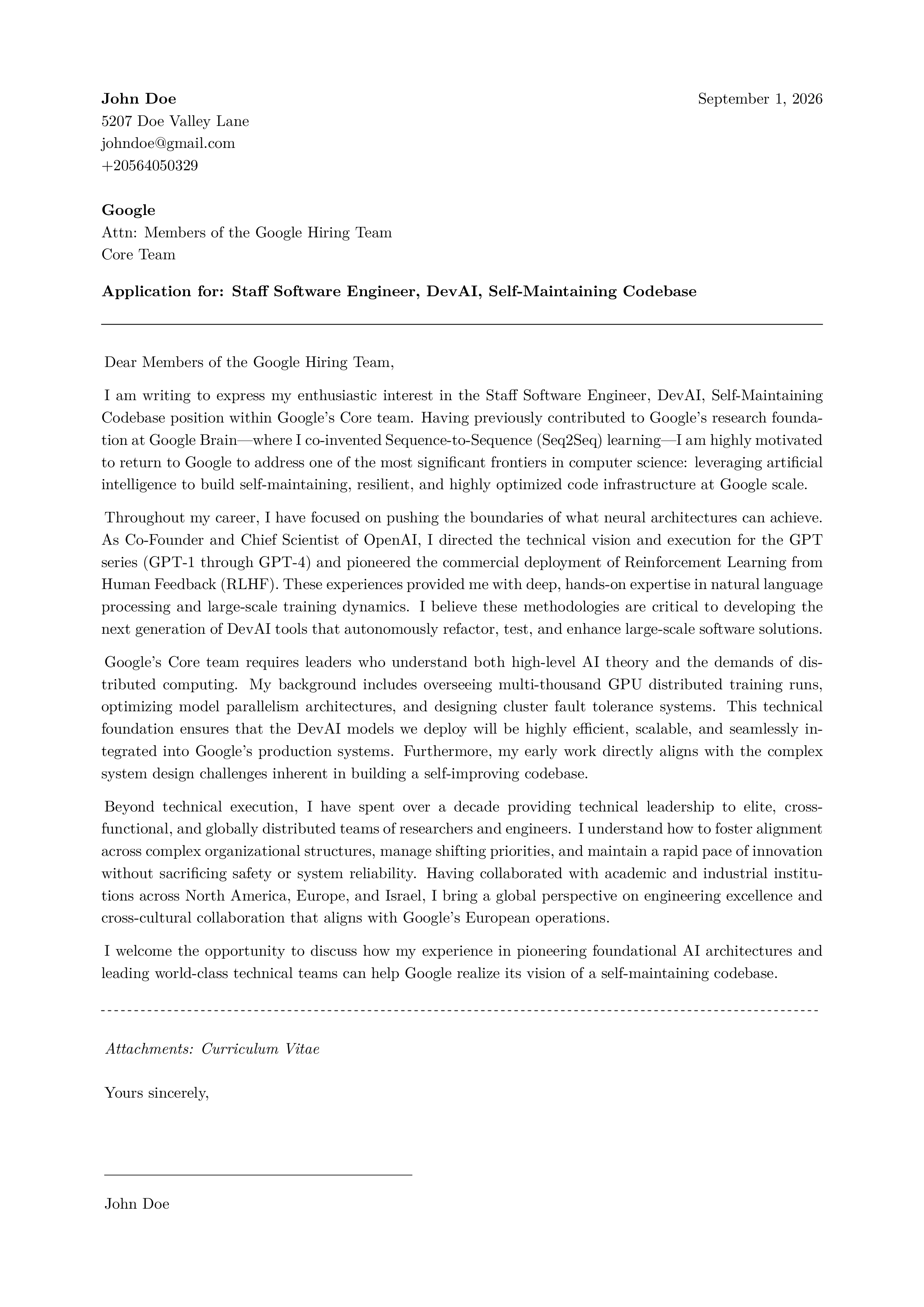
Your details, in place
These fields go straight into the layout. Confirm them when you apply the template.
-
Email Address
e.g. jane.doe@example.com
-
Phone Number
e.g. +1 (555) 123-4567
-
Street Address
e.g. 123 Main St, Apt 4B
About the template
An executive cover letter template for leadership roles
The Executive Suite cover letter template is built for senior professionals who need a composed, credible presentation. Its premium layout fits directors, vice presidents, department heads, consultants, and experienced managers applying for leadership or strategic roles.
Use it when your application needs to communicate judgment, scope, and measurable impact. A strong executive cover letter should connect your leadership experience to the organization's priorities rather than repeat your full career history. Coverlttr uses your CV and the role description to create a relevant starting point that you can refine with the outcomes and decisions that best represent your work.
Review the letter for specificity before sending it. Add accurate scale, team, budget, or business context where it strengthens the story, and keep the final document as focused as the position you are pursuing.
Executive cover letter template
An executive cover letter is one page on the scope of this role, not a second résumé. Executive Suite prints the header. The body should name the job and the results you can defend from your CV. You then apply the layout and export.
How to use an executive cover letter template
State the role and the scope, keep two results you can defend, and export the file.
-
Name the role and the scope
Say which job this is and the part of the organization your experience maps to. Do not open with a career summary.
-
Use results from your CV
Keep two outcomes you can explain in an interview. Do not add a metric that is not in your CV.
-
Leave the full history on the résumé
The résumé lists the jobs. The letter picks the scope that matches this posting. Link the two files only if the form allows one upload.
-
Apply Executive Suite and open the file
Confirm the contact fields, download PDF or Word, and open the download before you send it.